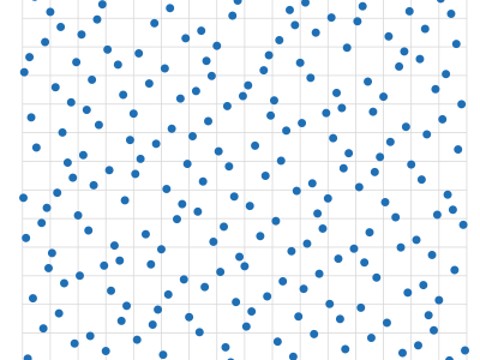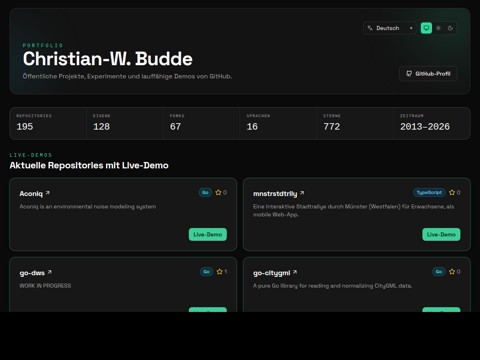
Thirteen posts ago this series started with a bit-crusher written in Object Pascal. Time to close the loop with a look at the stack I actually work in today — Go on the backend, TypeScript and React on the frontend — and at the place where all current work is visible at once.
Continue reading “Go, TypeScript, and a living portfolio”Category: Go
Audio on Linux, in Go
The VST years were a Windows story. My current audio experiments live somewhere else entirely: on Linux, inside the PipeWire graph, written in Go — and the parallels to the old days are almost comically direct.
Continue reading “Audio on Linux, in Go”gll-tools: measurement, modernized
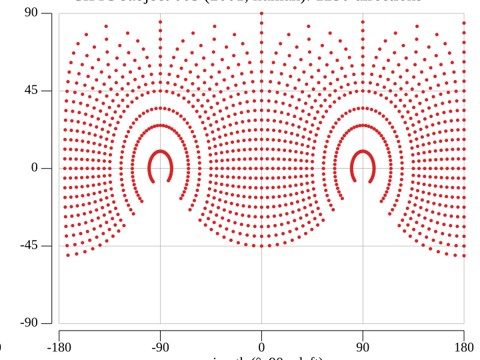
The measurement thread from the retrospective never ended — it moved to Go. gll-tools is a Go library and a set of CLI tools for reading EASE GLL (Generic Loudspeaker Library) data, the format the pro-audio world uses to describe loudspeaker directivity and behavior.
Continue reading “gll-tools: measurement, modernized”2D graphics in Go: agg_go and matplotlib-go
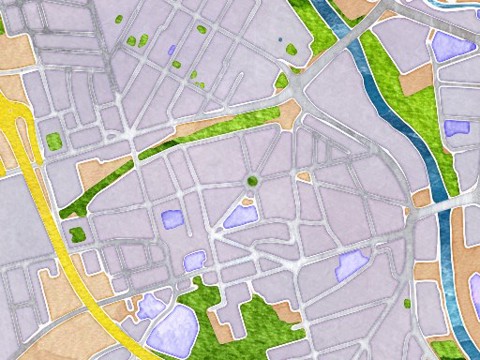
Alongside audio, 2D graphics has been the second constant in my work — from the Graphics32 team years and AggPasMod to today. The modern chapter of that thread is written in Go: agg_go and matplotlib-go.
Continue reading “2D graphics in Go: agg_go and matplotlib-go”go-dws: a Pascal thread, continued in Go
Of all my current projects, go-dws is the most personal: a reimplementation of DWScript — the object-oriented Object Pascal scripting engine — in Go. It is the continuation of a Pascal thread I have followed for decades, by other means.
Continue reading “go-dws: a Pascal thread, continued in Go”algo-*: a DSP suite in Go
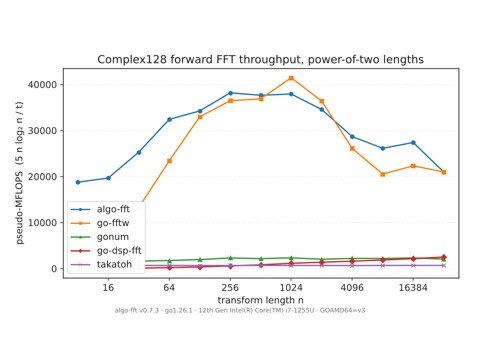
Fast forward to today. Most of my current code is written in Go, and the largest chunk of it is a family of DSP libraries under the algo-* umbrella — the direct descendant of everything the retrospective posts described, rebuilt on a modern stack.
Continue reading “algo-*: a DSP suite in Go”