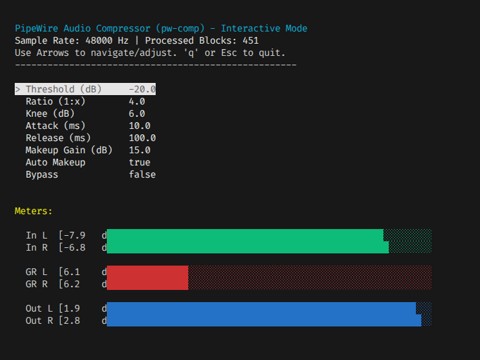
The VST years were a Windows story. My current audio experiments live somewhere else entirely: on Linux, inside the PipeWire graph, written in Go — and the parallels to the old days are almost comically direct.
Continue reading “Audio on Linux, in Go”Category: DSP
All about digital signal processing
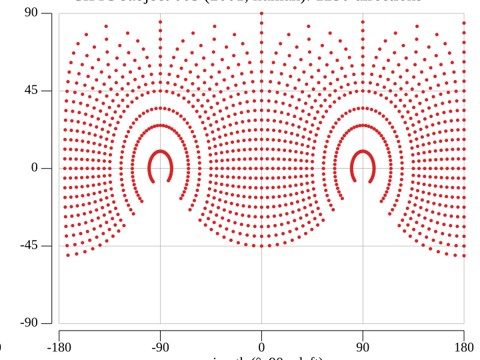
gll-tools: measurement, modernized
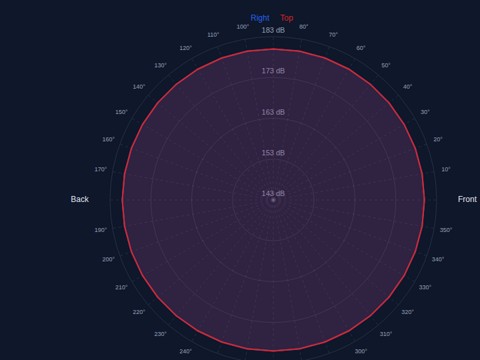
The measurement thread from the retrospective never ended — it moved to Go. gll-tools is a Go library and a set of CLI tools for reading EASE GLL (Generic Loudspeaker Library) data, the format the pro-audio world uses to describe loudspeaker directivity and behavior.
Continue reading “gll-tools: measurement, modernized”algo-*: a DSP suite in Go
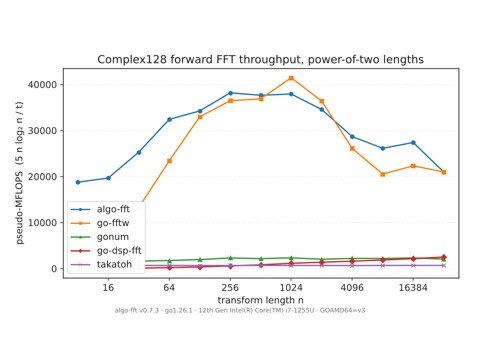
Fast forward to today. Most of my current code is written in Go, and the largest chunk of it is a family of DSP libraries under the algo-* umbrella — the direct descendant of everything the retrospective posts described, rebuilt on a modern stack.
Continue reading “algo-*: a DSP suite in Go”Measure everything
If plugins were the fun side of DSP, measurement was the honest side. You can convince yourself a filter sounds good; you cannot argue with its magnitude response. Over the years I built a small arsenal of measurement tools and published a collection of measurements made with them.
Continue reading “Measure everything”SynthEdit modules and tools
Here is a confession right away: I have never actually used SynthEdit to make music. But I was fascinated by how it worked — a modular environment where third-party modules (SEMs) plug into a visual synthesis graph. So I did what I always do with fascinating architectures: I took it apart and built for it. The results live under SE modules and SE Tools.
Continue reading “SynthEdit modules and tools”The VST plugin years
Everything on this site ultimately traces back to one obsession: audio. So it feels right to start this little retrospective series where my public work started — with VST plugins, written in Object Pascal, one filter and one waveshaper at a time.
Continue reading “The VST plugin years”